

Specialist care for sarees worth preserving.
Silk sarees are not ordinary laundry. At our Vajarahalli studio, every Kanjivaram, Banarasi and bridal saree is inspected by hand, handled zari-safe, and finished the way the weave was meant to fall. This page helps you work out what your saree needs — then takes you to the right care.
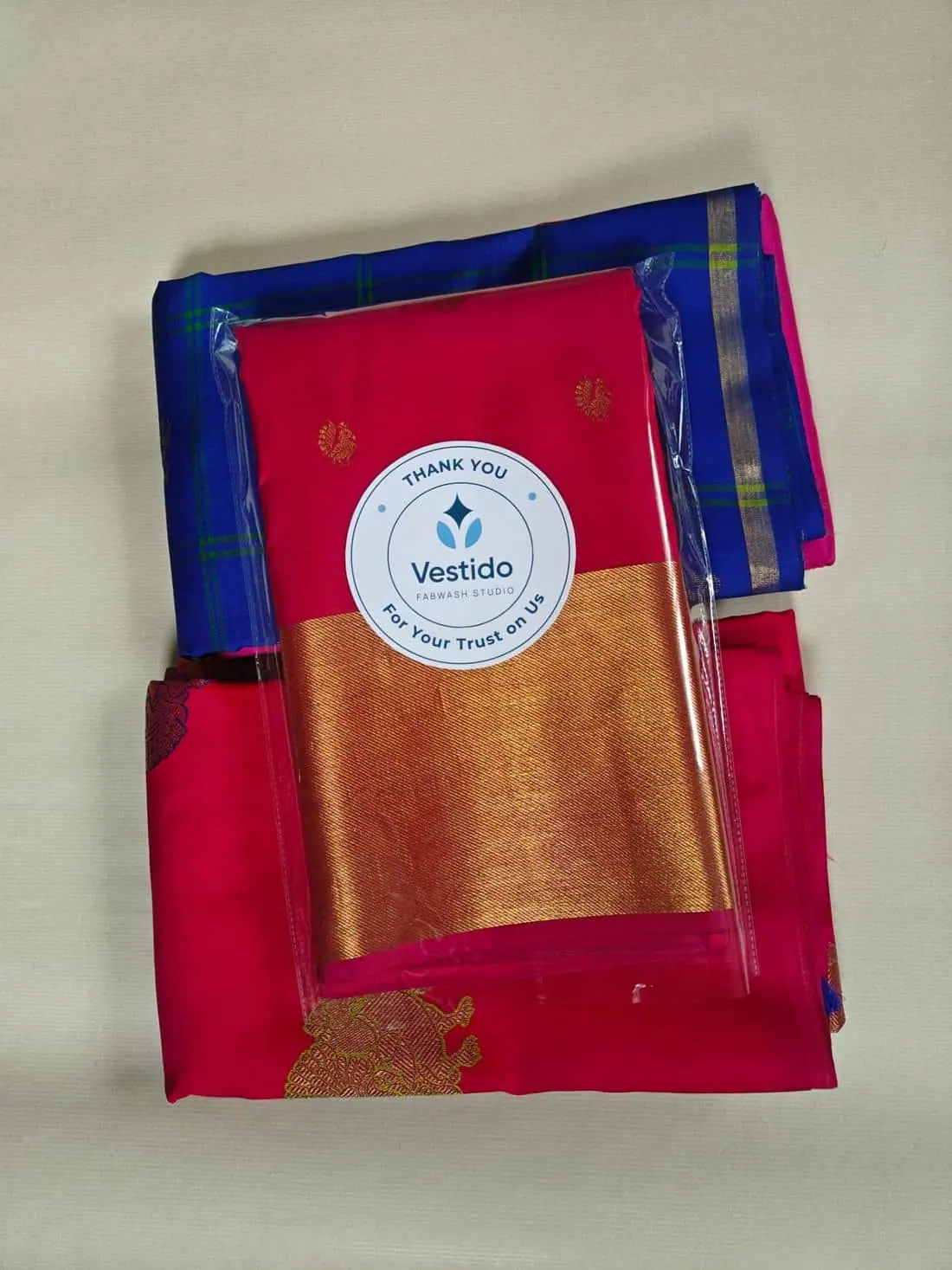
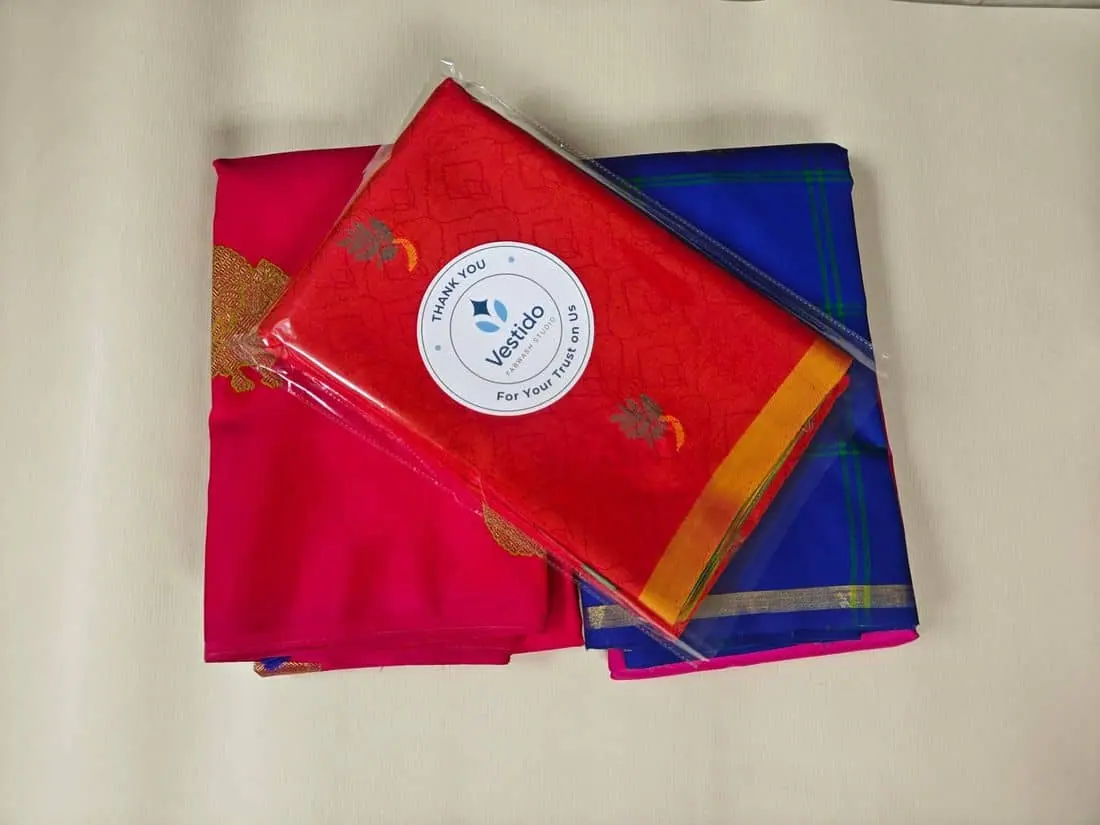
What does your saree need?
Most saree questions come down to one of three situations. Find yours — each leads to the right specialist care.
Needs cleaning?
Silk, zari and embroidered sarees that have picked up stains, odour or dullness after wear need a gentle specialist clean — never a home wash.
See silk saree cleaningLost its body or drape?
A saree that has gone limp or lost its crisp fall after a few wears usually doesn't need cleaning at all — it needs its starch and finish restored.
See saree roll polishingA wedding or bridal saree?
Bridal and heirloom sarees carry memories as much as zari. They deserve a slower, more deliberate routine — covered in the bridal section below.
Read bridal saree careKnow your weave
Four fabrics account for most of the sarees we handle. Each asks for something a little different.
Kanjivaram
A Kanjivaram's weight lives in its pure zari and dense silk weave. Folding it along the same creases for months weakens the zari at the fold line — refold along new lines every few months, and keep it wrapped in soft cotton or muslin, never plastic. When it comes back from wear, it needs handling that respects the zari: no harsh solvents, no wringing, and a finish that restores the fall without stiffening the border.
Banarasi
Banarasi brocades carry fine metallic threads worked through the body of the saree, and those threads are the first to suffer from moisture and rough handling. Store with the brocade side folded inward, keep naphthalene away from direct fabric contact, and air the saree in shade after every wear. Brocade that has dulled usually needs a careful clean and re-finish rather than pressing at home.
Mysore Silk
Mysore silk is lighter and softer than its Kanjivaram cousin, which makes it comfortable — and easier to crush. It takes a crease quickly and loses its lustre with repeated home ironing. A light starch and professional roll finish brings back the smooth, fluid drape this weave is known for, without weighing the fabric down.
Zari Care
Real zari is metal thread — silver, often gilt — and it tarnishes on contact with sweat, perfume and damp air. The rules are simple: let the saree breathe in shade before it goes back in the cupboard, never spray perfume while wearing it, and never store zari work against plastic. Tarnished or dulled zari can often be revived, but only with processes designed for metal thread.
Bridal saree care
A bridal saree is worn once and kept for decades — which means most of its life is spent in a cupboard, where the real damage happens. Sweat and perfume left in the fabric after the wedding slowly tarnish zari and yellow silk, often invisibly, for years.
Our advice is always the same: have the saree professionally cleaned and finished soon after the wedding, before it goes into storage — not years later when the damage shows. Once clean, wrap it in muslin, store it flat or loosely folded, and bring it out to breathe in shade once or twice a year.
Heirloom sarees coming the other way — out of storage for a daughter's or granddaughter's wedding — usually need both a gentle clean and a fresh finish to restore the drape the occasion deserves.
Saree care questions
How should I store silk sarees between wears?
Air the saree in shade for a few hours after wearing, refold it along fresh lines, and wrap it in soft cotton or muslin. Avoid plastic covers — they trap moisture and dull both silk and zari.
How often should a silk saree be professionally cared for?
After every two to three wears is a good rhythm for sarees in regular rotation. Heirloom and bridal sarees benefit from a professional check once a year, even if they haven't been worn.
My saree isn't dirty, just limp — what does it need?
Most likely a finish, not a wash. Body and drape come from the fabric's starch and press, and both fade with wear. A re-finish restores them without subjecting the saree to a full clean.
Can zari damage be reversed?
Dulled or lightly tarnished zari usually responds well to specialist care. Broken or pulled threads are a weave repair — that's worth a conversation with us before you hand the saree to anyone.
Not sure what your saree needs?
Send us a photo on WhatsApp or book a free pickup — we'll inspect the saree at the studio and tell you honestly whether it needs cleaning, a finish, or both.